Joe Barrera: Christmas in South Texas

Growing up in south Texas in the 50’s we used to get Christmas presents on three different days. First there was the feast of Saint Nicholas on December 6. Saint Nicholas, a fourth-century bishop who gave gifts to poor people, is the original gift-giver whose name has morphed from the Dutch Sinter Klaas into Santa Claus. Because of him people in Europe give and receive gifts. A remnant Spanish custom survived in our small town and the children got gifts on December 6. I remember getting oranges and apples in my stocking, but never the proverbial lump of coal that the  bad kids were supposed to get. For many of the older Mexican people Dec. 6 embodied the spirit of the season, whereas Christmas was the American celebration. All the Christmas customs, the gift-giving, the decorations, etc. were absent. We didn’t have a Christmas tree, for instance, until sometime in the late 50’s. My mother found a dried branch  from the huge pecan tree in the yard. She brought it inside the house, painted it white and hung Christmas lights on it. That was the first Christmas tree I remember. It looked beautiful. Gradually, Christmas presents began to appear under the tree. By the early 60’s most of the old customs had died out and the new Christmas had taken over.

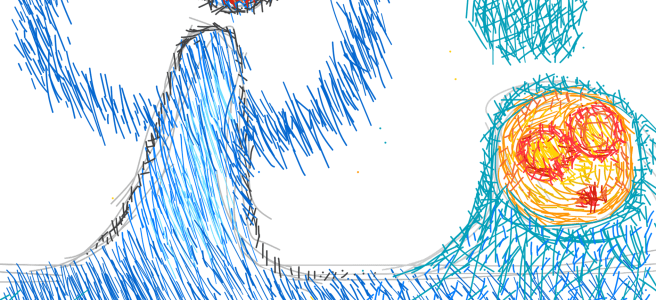
Nativity

The real celebration of “Christ’s Mass” was at church. “Misa de Gallo,” midnight mass on Christmas Eve was the important occasion and even the little kids would attend. The highlight was the procession of the children to the empty manger, to lay down the image of Baby Jesus. After mass everyone would go home and eat tamales and drink the powerful cinnamon-laced Mexican chocolate. That stuff could keep you up all night but of course that was not allowed for the children. The men had gone deer hunting and brought back plenty of venison. The women had spent hours in the kitchen marinating the meat and putting it into the corn dough wrapped in corn husks and then steaming the tamales in huge pots. There is nothing more delicious than venison tamales. For days afterward we would be eating tamales. At Christmas women ruled the house. I remember my mother and her “comadres,” which literally means “co-mothers,” making untold dozens of tamales and enjoying their sisterhood time. I sneaked in just to listen to them talk, but men were not allowed in the kitchen.

The twelve days of Christmas, December.25-January 6, had real meaning in those times. There was the joy of Christmas, but mixed with sadness, as all earthly experience must be. We remembered the Holy Innocents on Dec. 28, when all the men and boys named Inocente were honored. I often wondered how so many not-so innocent types could have that name. And how could Herod have killed so many babies? There was New Year’s Day, sacred to God the Father, who seldom gets any credit, but because of him sacred to all who bear his name, Manuel. After that there was Epiphany, on January 6, holy to all those named Epifanio. On Epiphany the Magi come bearing rich gifts. It is the Day of the Three Kings, el Dia de los Reyes Magos, the day of the Wise Men. This is also the name-day of all those named “Reyes.” In the old way of looking at things your name-day is much more significant than your birthday. The saint or sacred feast whose name you bear is your protector, a type of totem beloved in the Indo-Hispano culture.

If there was a true joyous day for all, this was it. Jan. 6 definitely eclipsed Christmas for gift-giving. Baltazar, Melchor, and Gaspar had brought gold, frankincense and myrrh to the Christ Child. We emulated them and brought our own gifts. We gave gifts to friends and family.  But in a holy time it’s the King you must honor and how can you give the King any gifts? He already has everything, owns everything. He doesn’t need your poor gift. The Irish nuns at the parish school told us so. They said that on his birthday it is the King who gives gifts. During this season we should ask the King for a favor. There is always life, but also death, and the Irish, like the Mexicans, are ever aware of death. The grace we should request, the sisters said, was for the dead–the release of dear loved ones from Purgatory. Release of captives, that was the true spirit of Christmas and Epiphany. More purified sinners are released from Purgatory at Christmas than on All Soul’s Day.

Joe Barrera, Ph.D, is the former director of the Ethnic Studies Program at UCCS, and a combat veteran of the Vietnam War.

James Stuart: Why Stories Matter

Colorado Writer, James Stuart, shares with the Almagre community the importance of stories…

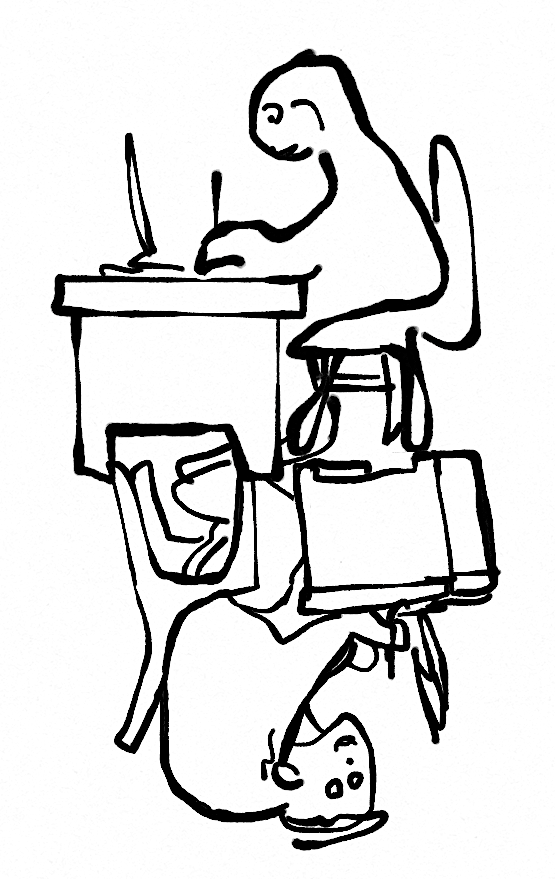
farrier

The greatest storyteller I ever knew probably hasn’t written anything longer than a personal check since high school. He was a farrier from Wyoming, and even at fifteen years old, I was a couple inches taller than him. But that didn’t give me any sense of scale in his presence. He could begin telling a story at lunch, tell three more over the course of an afternoon, and wrap them all up in an intricate bow just in time for dinner. He moved effortlessly between memory, folktale, pop culture, and dirty jokes, taking with him what he liked as he went and leaving the rest on the vine. Sometimes, you found yourself a character in his stories – a small part in a grand narrative you had already lived but looked forward to hearing told anyway. More times than not, that made you a punchline. But such was his skill, you enjoyed it nonetheless.

Through my work, I have been fortunate to know a number of great writers. Some among us are just naturally gifted at turning letters and punctuation into something beautiful. I’ve swapped notes with journalists, essayists, authors, poets, and screen writers. But in spite of their skill and success, none have ever matched the raw talent of that horseshoer I met when I was young. The greatest writers among us are also the best storytellers; the reverse doesn’t exactly hold true. That is the magic of storytelling in my eyes.

Storytelling may well be our most ancient tradition, crawling into existence from the primordial soup of early communication around the same time humans began to observe the world beyond food, water, and shelter. From its earliest days, it has not been confined by any medium.  It was paint on cave walls. It was music from carved bones and strung sinew. It was mythology, parable, and fable. On cold nights, it was traded around fires, providing an additional layer of protection from a world that remained largely mysterious. It was filled with heroes, monsters, tricksters, and sirens – many of whom live on with different names today. Animals often took on human qualities to teach or to amuse. Eventually, it would be written down, printed, recorded, filmed, digitized, and monetized. But the key ingredients and basic structure have not changed over the millennia, allowing storytelling to transcend cultures, wars, famine, plague, technology, and every other obstacle in its way. It connects us with our past, while preparing new generations for the future.

Storytelling will remain relevant because it is a direct response to basic needs. The need to be understood. The need to be entertained. The need to preserve knowledge. The need to be remembered. These necessities are not only timeless, they are fundamentally human.

As such, there will always be another story to tell.

AR email Art.png

James Suart received his Bachelors Degree in English from Colorado State University in 2011. He has dedicated himself to writing fiction that is fresh, thought provoking, and occasionally profane. His influences are extremely diverse, running the gamut from Ernest Hemingway and Ray Bradbury to Zadie Smith and Jhumpa Lahari. He is also the founder of the webpage THE FORGE, a site dedicated to very brief short stories.

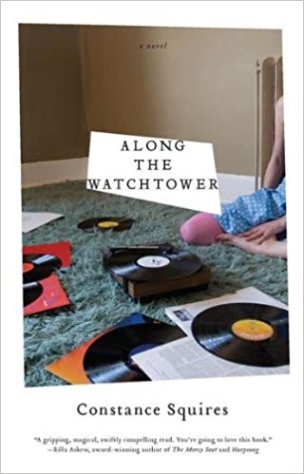
Book Chat: Along The WatchTower

In our next Issue, “Language & Music,” coming out December 26, we’re proud to feature an interview with award-winning Oklahoma author, Constance Squires, whose work has appeared in the Atlantic, Bayou, Eclectica, Identity Theory, New Delta Review, and many more.

Watchtower

Along the WatchTower (2012) is Ms. Squires first novel. Set in the 1980s, on an American army base in Germany and then in an Oklahoma small town, the novel chronicles the growing up of young Lucinda Collins, following her from adolescence on into young adulthood. We get to experience the growth of this eager-to-please, yet strong-minded woman through the world of a military family — overseas and Stateside.

The setting is something we don’t really see in fiction, that of the military family. And it would take someone with Ms. Squires’ particular talent to truly color and people an environment that is often institutional and drab. But there is no doubt, this novel is vigorous and alive.

The book gives us a wishbone with young Lucinda at the vertex and her mom on one side of the V, her father on the other. What makes the story wonderful to read is the author’s ability to deftly and clearly portray the characters’ cosmic arcs, and from the start we sense the tension bending on the bone where we find young Lucinda.

Faye Collins, Lucinda’s mother, obviously has the artist’s soul, the Creative’s gravitas; her’s is a mighty intellect harnessed into the world of being an army wife. She is always the volcano under the bulk of crust…waiting for release. The manner in which she has arrived in this marriage, as illustrated by Ms. Squires, makes complete sense. The fact that she appears unfit for the life it provides is obvious, yet her world is bruised by the desperate and inescapable need for her husband and kids — by the things they can and can’t provide.

Jack Collins, Lucinda’s father, is a relentless contradiction; the consummate military personality who is lovable and impossible to love, both devoted to the family and completely remote. Every awful action or comment for Jack is followed by a moment of redemption, which is then followed by a cold indifference, which is then followed by utter selflessness, which is then followed by callous bravado, which is then followed by incredible warmth and so on. He can piss us off. But…he also has our sympathy. One thing Ms. Squires clearly conveys is a permeant awareness, as seen by the children, the damage to men and women in the military…before caring about that sort of thing had any public traction.

This wishbone creaks from the start. It is Lucinda, our young protagonist who has to figure things out inside this arrangement. To be in the military, to grow up in that kind of family inevitably means the lowering of expectations in our friends. It’s not that we need them less, or that they’re worse…we just have to replace them all the time. So, standards might be a bit more flexible.

Throw in Rock and Roll — Punk — booze — a touch of fascistic background radiation — devastating metaphors — and we have a wonderful, coming-of-age tale spread across the Atlantic, in a setting that is too little represented in literature.

We need this author, and we need her to tell us her stories. Regardless of topic, Ms. Squires has the gift for flesh and blood. It’s impossible to think of Along The WatchTower without the people in it coming alive. For instance, Jack Collins has one of the clearest voices I’ve ever read. His dialogue crackles in the head with the clarity of a Holden Caulfield. And Ms. Squires’ energies are not wasted there; the minor characters pop as much as any.

As part of the Almagre community, we encourage you to support creative thinking, Great Storytelling, and find your way to a copy of Along The WatchTower. It is a pleasure from start to finish.

John Lewis,
Artist/Editor
AR monogram O

Mike Callicrate: Regenerative Food Practices

DOWN TO EARTH: The Planet to Plate Podcast

The current economic model is failing; harming both the farmer and the consumer. Mike Callicrate argues powerfully for a new way of thinking about our agriculture. He advocates humane animal husbandry and “regenerative” farming practices that complete a full food cycle. This is good for the farmer, the consumer, and the animal. He also lays out the destructive practices of giant corporations consolidating their market share, and how they are corrupting our ability to purchase good, clean, honest food.

In this excellent interview with Mary-Charlotte on the Down to Earth (Planet to Plate Podcast), Mike Callicrate revisits and expands upon topics from his conversation with The Almagre Review, in Issue 2: “Leadership.”

Mike-Callicrate-900x1350
Mike Callicrate: Rural Advocate. People Advocate. Animal Advocate

Joe Barrera: Veterans’ Day is about Creating Community

In 370BC a Greek Army ventured into Mesopotamia, lured into supporting a claimant to the throne by the promise of money and booty. How the Greeks managed to extricate themselves from a hopeless situation in what is now Iraq and Syria is the subject of the famous account, The Anabasis of Xenophon. “Anabasis” means “a journey out of.” The story is that Cyrus, the pretender to the throne of the Persian empire, is killed by his rival and the Greeks find that they have backed the wrong faction. This, of course, sounds familiar. We are now in the same position as Xenophon, the wise and courageous soldier who leads the Greeks out of the trap. But unlike Xenophon we have no exit strategy to free ourselves from the Iraqi and Syrian quagmire.

Halicarnassus (Anabasis)
Go to the Military Veterans’ Community Dialogues

No doubt about it. We are stuck in Mesopotamia, not to mention Afghanistan. In my opinion it happened because we misunderstood the desires of those countries to create communities according to their own rules. The same for our tragic misadventure in Vietnam. The task for us now is to extricate ourselves by rediscovering our own rules for community. I don’t want to make too much of the analogy but the lesson is clear. Xenophon’s Ten-Thousand fought and won their battles and survived the long journey out of the desert by the unity forged in comradeship. They were a small army, but they acted more like a community, a nation on the march through hostile territory.

Community is essential. This is true in both the military and civilian spheres. Armies imbued with comradeship, the military equivalent of community, win battles against much stronger foes. Civil societies succeed, but only if they are true communities. During this season, when we honor veterans and the society they have protected, it’s good to reflect on this. Philosophers have described community in many ways. It’s useful to read what they say, especially those who write about human communities from the experience of war. J. Glenn Gray, the eminent Colorado College philosopher, in his book The Warriors: Reflections on Men in Battle says this about the communal spirit, what he calls “love as concern:”

The characteristic mood that accompanies love as concern is neither deep joy nor unrestrained grief, so often typical of erotic love. Concerned love knows relief and it knows anxiety in its depths, but seldom does it put everything at stake on the preservation of this or that life or treasure. Its care is for the whole and not the part.

The essence of community is a love concerned with the whole. Concerned love leads to the building of community after the destruction of war. Fortunately for human beings, most soldiers are not made into habitual killers by war, even if they are soldiers who have killed. They are capable of living civilian lives after war. Gray, the WWII veteran, is correct about this, even if many veterans doubt it. Other writers have sought to define community. Sebastian Junger, who was an embedded journalist with the 173rd Airborne Brigade in the Korengal Valley of Afghanistan and made a documentary about the experience entitled “Restrepo,” defines “concerned love” in a different way, the way of male bonding. In

his book, Tribe: On Homecoming and Belonging, Junger discusses a type of love among soldiers. The men form the ultimate in male bonding, a brotherhood which only men in battle can form. Hardship, such as war, enables soldiers to transcend selfishness. Junger knows from first-hand experience that the bane of modern armies, PTSD, would not exist if soldiers preserved that brotherhood when they return to the civilian world. Unfortunately, combat veterans lose this protection all too quickly. This Veterans’ Day, we should provide veterans the chance to re-enact the communal love of their small units, which existed in our society before we lost our tribal identity.

A good example of communal love is The Warrior Storyfield in Longmont. A group of veterans and artists formed a “tribe,” a sculpture project that gives the unspoken experience of war a voice through the creation of huge iron statues of a dragon, representing homo furens, the ferocious warrior, and the phoenix, representing the resurrection of human love in the soldier when he comes home. Closer to home we have the Veterans Community Dialogues, to be held on November 7.

Joe Barrera, Ph.D, is the former director of the Ethnic Studies Program at UCCS and a combat veteran of the Vietnam War.
 

Again, Please. Tell Me Your Story

As fall turns to winter, I’d like to reconsider a particular reaction.AR_Fall Harvest

We have all been in the room before. Someone else is there…it might be one person, or two, or a crowd. A friend or family member begins a story. We’ve heard it already…many times.

But we let them go on out of politeness. (Is this person okay? Is he well? Does he not remember telling this story last Thanksgiving?)

This got me thinking about the importance of telling the same story again and again. First, it comes from a place of acknowledgement — I grow older, responsibilities increase, the kids acquire new demands; demands on my time, my attention, my bank account, my emotional and spiritual reservoir.

I used to think that my “elders” (I use this term carefully and loosely) were trapped in forgetfulness. At the dinner table, during or after, somehow, someway, the conversation inexorably drew to the moment where someone would re-commence the time when…

Often the details change. But what are details other than the sharp edges on a sugar cube? They don’t matter…around the pond of reminiscence, they polish down into the smooth stone of one-liners, zingers, bad accents, cued laughter. Or is it cued sadness? Either one, yes? Everything in between.

One day, not too many years ago, I noticed myself telling the same story…one I’d told many times. There was also this other strange little thought. I knew I was telling a story everyone had already heard. I knew it. They knew it. I knew that they knew it. And so on.

But, what followed proved to be an insight, albeit small. I did not care that I’d told this story before. I plowed through my social reserve and kept the performance alive, armed with those punches and zingers, cued their laughter, and delivered what my polite audience allowed. I told this story because it was a pleasure to tell. It’s always a pleasure to tell.

Why?

Because it is important. To me, it was a bright cherry along the branch of experience that is worth repeating. I have to repeat it. Others have to hear it. Memory is bad and faulty, and so much of what we live is lost along that long gray branch. But the bright cherries become the lodestars of identity. This is who I am. This is one among many stories that define the “johnness” of John to others…and to me.

Which leads me back to my original thought. That reaction! When a friend or family member begins again that story we’ve heard throughout the years…we stop, listen, and appreciate. We know they’ve told this story before. But they know it too! It does not matter.

We listen, because it is the teller’s pleasure to tell! We grant this woman or man the dignity of his or her story, the dignity of his or her life and experience. We permit them the bright cherry of identity. We listen…because it is a pleasure to listen.

John Lewis
Artist/Editor


COLORADO MILITARY VETERANS’ COMMUNITY  DIALOGUES (NOV 7)


MVCD Button
Click for map to event.

Date: TUESDAY, NOVEMBER 7, 2017
Time: 10AM-4PM
Event: Healing Through Story-Telling: We talk of experiences in the war zones and about experiences coming home. (You can stay for as long or as short a time as you want. We provide lunch.)

THE WOUNDED WARRIOR PROJECT
1 SOUTH NEVADA
COLORADO SPRINGS, CO 80903

MVCD_Photo A

Veterans talk to other Veterans. Spouses, Families, Friends Join the Dialogue. Supportive Community Members Extend Welcome and Acceptance. We are looking for veterans and active-duty soldiers, their families and friends, and community people who want to help veterans in their re-adjustment.

Contact: Joe Barrera, combat veteran, Vietnam War:  jjbarr46@gmail.com

Why We Write: 1

The question reminds me of Nabokov, who having written Lolita, experienced the relentless question, “Why did you write that book,” or, “What is it about?” Of course, audiences and critics had their own ideas.

Nabokov tired of other people telling him what the story was about–explaining that he wrote Lolita simply to “participate in the ecstatic.” When we discuss relationships between a creative work and an individual, we describe the relationship in many ways: perhaps joy, or offense, a profoundly spiritual feeling…or simply fun! Maybe a creative work goes unregistered. Ah! The unrequited…

But for those who are creative…painters, sculptors, musicians, writers! We understand Nabokov’s words–Ecstasy, experienced during the act of creation. Over the years, I can’t recall a Creative at work who wore the face of serenity. Rather, to me, it always looks like an expression of concentration sourced through meaning. One is precisely where they ought to be during the act.

Christopher Hitchens once advised an audience about this very notion. According to him, a writer writes not because he wants to, but because he has to. For writers, this is obvious. There is something inside us, and it must come out. To hold it inside is to take a vow of celibacy. Writers who don’t write, (painters who don’t paint, musicians who won’t play, etc.), are living a celibate lifestyle.

Back to Nabokov. Anyone who has spent time involved in artistic creation knows the feeling. Ecstasy. I find over the years that writing becomes no less arduous. In fact, it seems to become harder. Words are more carefully chosen, phrases more measured, plotting instincts subjected to increased scrutiny.

But the magic happens. With the blessing of the “muse,” we roll into another region of the mind. The turbid, whirling mass behind the wall of conscious and conscientious manners, of deliberate and logical thinking, becomes accessible. It’s quite extraordinary. Powerful. And, it is the bringer of fervent artistic creation along with its accompanying devils: doubt, fear, self-abuse. We must deal with these in the aftermath. In the tempest, however, is the ecstasy Nabokov refers to where what had seemed impossible becomes more than that…it becomes inevitable. The universe of a novel or painting or album pulls together of its own volition, because the mass and inertia is too large for one person to do it deliberately. But somehow it happens–the universe briefly organizes, the impossible has become inevitable–and only because the artist has become the medium for that volition.

Afterwards…we beg off for awhile, collect ourselves, and begin again the process of inviting the muse.

Uro-bureaus
Uro-bureaus

Joe Barrera: Stories that Heal

MVCD Button
There was a picture in The Gazette a couple of months ago that really got to me. The photo was front-page, full-color, and it was pure heartbreak. In the picture a grieving mother is on her hands and knees decorating the grave of her son. I could feel the pain of her broken heart. That awareness prompted me to propose a solution for veterans’ suicides.

The suicide of that mother’s son, the “ideal Marine,” as he was called, a young Colorado Springs veteran of the wars in Iraq and Afghanistan, was a senseless tragedy. It was senseless because the alienation from society that often precedes suicide can be prevented. We already know how to do it. We have solutions. We just need to implement them.

I would like to propose one good solution, simple, easily done and effective in healing the soul damage caused by war. Once we understand the soul damage of war veterans, especially combat veterans, we then have the option of implementing what we call The Military Veterans’ Community Dialogues. What are the Military Veterans’ Community Dialogues? They are opportunities for soldiers to tell their stories of war and coming home from war to other soldiers and veterans in non-judgmental, supportive, structured but informal sessions, in the presence of families, friends, and community members.

Please note: In the presence of loved ones, spouses, families, friends, and just as important, members of the public, the community at-large. It is common for veterans not to talk about their war experiences to “civilians,” which includes their families and friends. But in the Dialogues, they will open up and tell their stories to other soldiers and veterans. The families, friends and community members listen, absorb many things they have never heard before, and they react, they begin to tell their stories. All the group – soldiers, veterans, families, friends, community members – start to talk.

Healing begins once psychically damaged veterans start to tell their stories and listeners extend acceptance. All veterans deserve help in their readjustment to civilian life, which for many can take a whole lifetime. What is commonly not understood, however, is that like the young Marine who committed suicide, those who are combat veterans very often need a heightened level of support. Tragically, the “Ideal Marine” never got that. As a combat veteran of the Vietnam War I know the need for this kind of support. Because they are built on community, the Military Veterans Community Dialogues, which we have been doing since 2005, can provide some of that support. No amount of professional therapy at the VA or any where else, however competent and well-intentioned, can substitute for true community.

The principle idea motivating the Dialogues is first an honest understanding of what happens to soldiers in war, especially the soldiers who do the actual fighting. Secondly, it is to propose the creation of a true community, a network of responsible people actively bringing war veterans back into the embrace of the society they have fought to defend. When soldiers tell their stories there is a chance they will heal their trauma. If we heal trauma we reduce suicides. What is combat veteran trauma? There is an emptiness in the lives of many war veterans that is difficult to fill.

When infantry soldiers and others who actually fight are trained for war. they are trained to be the weapon that we use against aggressors, the sharp edge of the sword that bends our enemies to our will. This is the morality of war, if we can speak of war as a moral thing. We must destroy our enemies before they destroy us. This justification – however much it is believed in the beginning – ultimately fails to convince many soldiers, especially in the kinds of war we have been fighting since 9/11. We have been fighting insurgencies which create a moral dilemma because we kill non-combatants.

Like the Vietnamese in my war, Iraqis and Afghans will resist. They will fight against us. This resistance causes untold civilian casualties, including women and children. The consequence is that we have many soldiers who did their duty honorably but are now afflicted with soul damage, who are suffering from what is called “moral injury.” Moral injury can create a corrosive guilt. Out of this guilt a fateful remorse is born and a terrible sadness that defies healing. Soldiers who return from fighting insurgencies struggle to forget the war, to conquer guilt, to re-integrate. But for some this is very difficult if not impossible.

They do not see any hope of becoming normal again. They are at home, but not at home. Many develop a consciousness of futility which leads to depression. This leads to a desire to end the suffering, to seek solace in oblivion, to just slip away into nothingness. To die.

~ O~

Joe Barrera, Ph.D., is the former director of the Ethnic Studies Program at UCCS, a combat veteran of the Vietnam War and one of the founders of the Colorado Springs Military Veterans’ Community Dialogues.

Almagre Review Logo2

Why We Read: 2

Being a project dedicated to growing Colorado literature, we ask ourselves this question at the Almagre quite a bit. Why build a journal, paper no less, and expect others to read it?

For us, the easy answer is this: pick up a copy of Issue 3, open it, fan the pages, breathe in the spine’s scent. Take it, sit with it, create a silent space. Then…explore the poems within, the stories, the essays, the art. We know that the Authors and Artists in Issue 3 will give any reader their money back many times over…restored in full with ideas, new perspectives, as-yet-learned words, and renewed optimism in the power of imagination.

But that is self-serving. And it’s really about more than our journal. It’s about participation in all that’s going on. Literature promises truth; and that is even when it distorts history, or kneads it, bends it, warps it, or is about hypocrites and thieves and liars; or deals with gouging, skullduggery, banditry, or lowlifes. Literature promises truth, because it triangulates around it, shines a flashlight one way, then another, producing a changing shadow that can provide deeper understanding. The point is, literature begs us to know that any given subject requires curiosity and examination from multiple angles. This curiosity should never end.

We’ve entered an age of alternative facts…and that is a worrying thing. In certain venues, we prefer it one way—facts as facts—a thing which doesn’t build on alternatives but on additions. With literature (fiction and nonfiction), we are faced with an honest proposition: “Here is my side of the story,” or, “Here is a side of the story.” By taking the time to do this, we acknowledge that a gain in understanding is a journey. A matter of course. For those who believe they have reached a destination, we feel pity.

To read is to fend ignorance, acquire knowledge and wisdom, to join the polity as those who would prevent a world of alternative facts. For many of us, it is the way forward.

With Profound Gratitude to all our Readers,

Editor & Artist, John Lewis